
Somnath Jyotirlinga
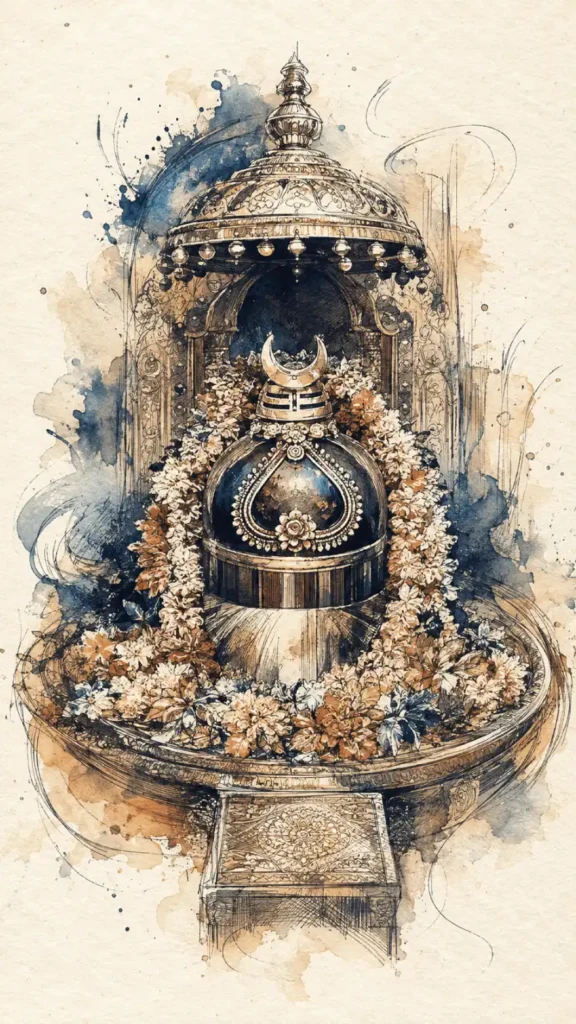
● Somnath ● Mallikarjuna ● Kashi Vishwanath ● Baidyanath ● Kedarnath ● Grishneshwar ●
● Rameshwaram ● Bhimashankar ● Mahakaleshwar ● Trimbakeshwar ● Nageshwar ● Omkareshwar ●
The Sacred Shrine of Lord Shiva
On the western coast of Gujarat, where the land of Prabhas Patan meets the Arabian Sea, stands one of Hinduism’s most revered Shiva temples: Somnath Jyotirlinga. Revered as the first among the twelve Jyotirlingas, Somnath is not simply a temple associated with Lord Shiva. It is a sacred landscape where mythology, pilgrimage, architecture, history, and living devotion come together.
The shrine is traditionally connected with the story of Chandra, the Moon God, whose devotion to Shiva led to his release from a curse. The sacred region of Prabhas Patan is also associated with important traditions concerning Lord Krishna and several other pilgrimage sites.
For centuries, Somnath has remained a place of worship and pilgrimage. Its history also includes repeated destruction and reconstruction, making the temple an enduring symbol of religious continuity and cultural resilience. The present temple, reconstructed after Indian independence, was consecrated in 1951.
Who Is Somnath?
Somnath is one of the sacred manifestations of Lord Shiva and is traditionally identified with the first of the twelve Jyotirlingas. The name is closely associated with Soma, another name for Chandra, the Moon God. In Hindu tradition, Shiva is worshipped at Somnath as the divine presence who answered Chandra’s intense devotion.
The concept of a Jyotirlinga is deeply significant in Shaiva tradition. The word Jyotirlinga combines jyoti, meaning light or radiance, with linga, the symbolic form through which Shiva is worshipped. A Jyotirlinga therefore represents Shiva as an immeasurable divine presence associated with light and consciousness. Somnath occupies a special position among these twelve sacred centres. The Shree Somnath Trust identifies it as the Aadi Jyotirling, or the first among the twelve Jyotirlingas.
The Meaning of the Name Somnath
The name Somnath is generally understood as “Lord of Soma” or “Lord of the Moon.” Soma is an ancient name associated with Chandra, the Moon deity, while Natha means lord or master. Thus, Somnath expresses the relationship between Chandra and Lord Shiva. This meaning becomes especially significant when viewed alongside the traditional story of Chandra’s curse. The Moon’s connection with Somnath is not merely linguistic; it is central to the sacred identity of the pilgrimage site. The story presents Shiva as the compassionate Lord who responds to sincere devotion and restores balance when the devotee turns towards him with humility.
The Legend of Chandra and the Birth of Somnath
One of the best-known traditions associated with Somnath concerns Chandra, the Moon God, and Daksha Prajapati. According to the traditional account preserved in Shaiva sources, Chandra married the twenty-seven daughters of Daksha, who are associated with the twenty-seven lunar nakshatras. Chandra, however, showed particular affection towards Rohini, giving her greater attention than his other wives.
Daksha became displeased with Chandra’s behaviour and pronounced a curse upon him. As a consequence, the Moon began to lose his radiance. Seeking relief, Chandra turned towards Lord Shiva and undertook severe penance at the sacred region of Prabhas. Shiva was pleased by his devotion and granted him relief from the curse.
The story also explains within Hindu sacred tradition for the waxing and waning of the Moon. More importantly, it expresses a spiritual principle: devotion, repentance, and surrender can lead the individual back towards balance. The Shree Somnath Trust specifically preserves this Chandra-Daksha tradition and identifies Somnath with Shiva’s blessing that relieved the Moon from his affliction.
Somnath as a Jyotirlinga
The twelve Jyotirlingas occupy an especially important place in the worship of Lord Shiva. They are sacred locations where Shiva is traditionally believed to have manifested as divine light. Somnath is regarded as the first of these twelve sacred manifestations. Traditional accounts associate the Jyotirlinga with Shiva’s infinite nature: light without beginning or end, beyond ordinary human measurement. The physical Shiva Linga at Somnath therefore becomes more than an object of worship. For devotees, it represents the presence of the infinite Shiva within a sacred geographical and devotional setting. This connection between the cosmic and the tangible is one reason Jyotirlinga pilgrimage has remained important across generations.
The Sacred Landscape of Prabhas Patan
Somnath does not stand in isolation. The wider Prabhas Patan region is itself an important pilgrimage landscape. The area is associated with the confluence of the Hiran, Kapila and Sarasvati rivers and their meeting with the sea. It is also deeply connected with traditions surrounding Lord Krishna.
According to the pilgrimage tradition maintained by the Somnath Trust, Bhalka Tirth is associated with the episode in which Krishna was struck by the arrow of a hunter, while the nearby sacred landscape is connected with his final journey from earthly life. The region therefore brings together several important strands of Hindu sacred memory: Shiva worship, Krishna traditions, pilgrimage, rivers, the ocean and ancient sacred geography.
The Temple and Its Iconography
The present Somnath Temple is an imposing stone structure built according to the Kailas Mahameru Prasad architectural tradition.
The temple complex includes the garbhagriha, or sanctum, along with the Sabhamandap and Nrityamandap. The principal shikhara rises prominently above the temple, creating the unmistakable vertical profile of the shrine against the Arabian Sea. The Shree Somnath Trust describes the temple as the seventh existing temple on the site and associates its modern reconstruction with Sardar Vallabhbhai Patel.
At the heart of the sanctum is the Shiva Linga of Somnath. Unlike an image that attempts to represent the complete human form of a deity, the Shiva Linga communicates Shiva through a highly symbolic form. Its simplicity is part of its spiritual power. The form does not attempt to define the infinite; instead, it points beyond visible form.
The temple’s coastal setting adds another dimension to its visual identity. The structure rises between the sacred land and the vast Arabian Sea, creating a striking relationship between architecture, nature, and devotion.
Symbolism and Spiritual Meaning of Somnath
The spiritual significance of Somnath can be understood through several interconnected ideas.
Devotion and surrender
The story of Chandra teaches that sincere devotion can become a path towards restoration. The Moon approaches Shiva not through pride but through penance and surrender.
Light and consciousness
As a Jyotirlinga, Somnath is traditionally connected with jyoti—divine light. This can be understood devotionally as a reminder of the inner light associated with consciousness and spiritual awareness.
Renewal
The history of the temple gives the idea of renewal an especially powerful cultural dimension. The shrine was repeatedly rebuilt, and the present temple was reconstructed in the years following Indian independence.
Continuity
Somnath demonstrates how sacred traditions can survive through changing historical circumstances. A temple may be reconstructed, architectural forms may change and generations may come and go, yet the sacred memory attached to a place can remain alive.
Why Devotees Continue to Connect With Somnath
For many devotees, visiting Somnath is an experience of pilgrimage rather than simply sightseeing. The sound of the sea, the sight of the temple rising beside the coast, the presence of the Shiva Linga, and the stories associated with Prabhas Patan create a powerful spiritual environment. For others, Somnath is connected with family memory. A pilgrimage undertaken with parents or children can become part of a family’s cultural inheritance.
The temple also has a strong connection with festivals and religious observances. Mahashivratri is among the important celebrations associated with Somnath, while the wider pilgrimage region also observes events such as Kartik Purnima and other religious occasions. The official Somnath Trust maintains a calendar of festivals and religious events. The significance of such traditions does not depend upon making promises about material results. Their value lies in devotion, remembrance, community and the opportunity to turn inward.
Somnath in Everyday Spiritual Life
Lord Shiva has always had a strong presence in everyday Hindu devotional life, and Somnath represents one of the most powerful geographical expressions of that tradition. A devotee may encounter Shiva through temple worship, meditation, chanting, the offering of flowers or bilva leaves, or simply through quiet remembrance. For those unable to undertake a pilgrimage, sacred art can also become a way of maintaining a connection with the stories and symbols associated with a sacred place.
A carefully created image of Somnath can evoke the architecture of the temple, the presence of Shiva, and the extraordinary meeting of shrine and sea without attempting to replace the experience of pilgrimage.
The History of Reconstruction
Somnath’s history is inseparable from its repeated cycles of destruction and rebuilding.
Historical accounts record attacks on the temple over different periods. The Ministry of Culture describes Somnath as a shrine that experienced repeated destruction and renewal, while highlighting the reconstruction of the temple after Indian independence as an important chapter in its modern history.
Following independence, Sardar Vallabhbhai Patel played a major role in the decision to reconstruct the temple. The foundation process began in the early years after independence, and the existing temple was consecrated on 11 May 1951 by India’s first President, Dr. Rajendra Prasad. The reconstruction therefore belongs not only to the history of a temple but also to the cultural history of modern India.
In 2026, the Government of India commemorated both the seventy-fifth anniversary of the 1951 consecration and a millennium since the first recorded attack on Somnath in 1026.
The Sacred Place: Somnath Temple, Gujarat
The Shree Somnath Jyotirlinga Temple is located at Prabhas Patan in Gir Somnath district, Gujarat, on the Arabian Sea coast.
The official address published by the Shree Somnath Trust is:
Shree Somnath Trust Somnath, Prabhas Patan District Gir Somnath – 362268 Gujarat, India
The temple remains an active place of worship and pilgrimage rather than simply a historical monument.
Somnath and Sacred Art
Sacred places often survive in cultural memory not only through temples and pilgrimage, but also through art.
At ShaktiShraddha, devotional art is approached as a meeting point between faith, cultural memory and visual expression. An artwork inspired by Somnath can bring together the distinctive architecture of the temple, the symbolism of the Jyotirlinga and the atmosphere of the western coast.
The purpose of such art is not to replace worship. Rather, it can preserve a visual memory of a sacred tradition.
A Somnath artwork may also become part of a larger Jyotirlinga collection, allowing each shrine to be experienced through its own architectural character, mythology, and cultural identity.
The artistic interpretation can therefore become a quiet reminder of a much larger story: Shiva worship, pilgrimage, resilience and the continuing relationship between sacred places and human creativity.
Somnath Artwork in a Home or Devotional Space
Devotional artwork can occupy different places in contemporary homes.
A Somnath-inspired artwork may be displayed in a prayer space, meditation corner, study, living area, or within a collection of Indian sacred art. The appropriate setting ultimately depends upon the nature of the artwork and the personal devotional practices of the household.
What gives such an artwork meaning is not a promise of guaranteed prosperity or supernatural benefit. Its value can lie in the story it preserves, the beauty of its composition, and the personal connection it creates with a sacred tradition.
For a collector of Indian devotional art, Somnath can also form an important part of a broader Jyotirlinga series—one that visually explores the twelve sacred manifestations of Shiva across India.
Somnath as a Living Symbol of Renewal
Perhaps the most enduring lesson of Somnath is found in the relationship between devotion and renewal. The temple has passed through dramatically different historical periods. Yet Somnath remains a functioning centre of worship on the same sacred coastal landscape. Its story therefore reaches beyond mythology and architecture. It speaks to the human desire to preserve what is considered sacred, rebuild what has been lost, and transmit cultural memory from one generation to another.
For devotees, Somnath is Shiva.
For students of Indian culture, it is a remarkable sacred landscape.
For historians, it is a site with a complex and layered past.
For artists, it is an extraordinary meeting of mythology, architecture, ocean, and memory.
And for anyone approaching it with respect, Somnath offers an opportunity to encounter one of the enduring symbols of Hindu sacred tradition.
FAQs
1. What is Somnath Jyotirlinga?
Somnath is one of the twelve sacred Jyotirlingas dedicated to Lord Shiva and is traditionally regarded as the first or Aadi Jyotirlinga.
2. Why is Somnath called Somnath?
Somnath means “Lord of Soma” or “Lord of the Moon.” The name is connected with the traditional story of Chandra, the Moon God, and his devotion to Lord Shiva.
3. Where is Somnath Jyotirlinga located?
Somnath Jyotirlinga is located at Prabhas Patan in Gir Somnath district of Gujarat, on the western coast of India.
4. Who rebuilt the present Somnath Temple?
The post-independence reconstruction was initiated with the support and resolve of Sardar Vallabhbhai Patel. The present temple was subsequently constructed in stages and consecrated in 1951.
5. When was the present Somnath Temple consecrated?
The existing temple was consecrated on 11 May 1951 by Dr. Rajendra Prasad, the first President of India.
6. What is the main legend associated with Somnath?
The principal legend concerns Chandra, the Moon God, who was cursed by Daksha and subsequently worshipped Lord Shiva at Prabhas. Shiva granted him relief from the curse.
7. Why is Somnath important in Hindu tradition?
Somnath is important because it is regarded as the first of the twelve Jyotirlingas and is associated with major Shaiva traditions, pilgrimage, sacred geography, and the continuing worship of Lord Shiva.
8. How can I reach Somnath Jyotirlinga from Somnath Railway Station?
Somnath Railway Station is the nearest railway station to the Somnath Temple, located approximately 0.5 km away. The station provides a very convenient arrival point for pilgrims travelling by train. From the railway station, devotees can reach the temple by a short auto-rickshaw or taxi journey, or walk depending on their luggage and personal preference. Veraval Railway Station, approximately 7 km from Somnath, is another option and has connections with several major cities. Somnath is also connected by rail and road with Ahmedabad and other important destinations in Gujarat.
9. How can I reach Somnath Jyotirlinga from the airport?
The nearest airport to Somnath is Diu Airport, approximately 85 km away, according to the Shree Somnath Trust. Diu is connected with Somnath by road. Another option is to fly to Rajkot, approximately 200 km from Somnath, or Ahmedabad, approximately 390 km away, and continue the journey by road or rail. The most suitable option depends on flight availability and your overall travel itinerary. For pilgrims travelling by air, it is advisable to check current flight schedules and road connections before planning the journey, as available services can change.
10. What are the important places to visit near Somnath Temple?
A pilgrimage to Somnath can be combined with several important sacred sites in and around Prabhas Patan. Bhalka Tirth, Dehotsarg Tirth, Triveni Sangam, Geeta Mandir, Ahilyabai Temple and Somnath Museum are among the notable places associated with the religious and historical landscape of the region. Bhalka Tirth and Dehotsarg Tirth are particularly significant in the traditional accounts associated with Lord Krishna’s final journey to His divine abode. Triveni Sangam, where sacred rivers are traditionally associated with the region, is another important pilgrimage destination. The Shree Somnath Trust also operates a Tirth Darshan Bus from the main temple gate for visiting nearby temples and sacred places.
Sources & References
- Shree Somnath Trust — official information on Somnath Jyotirlinga, its traditions, history, and temple.
Shree Somnath Trust — Official Website - Ministry of Culture, Government of India — Somnath Swabhiman Parv and the history of the temple’s post-independence reconstruction.
Ministry of Culture — Somnath Swabhiman Parv - Gujarat Tourism, Government of Gujarat — official tourism information on Shree Somnath Jyotirlinga Temple and the Prabhas Patan pilgrimage region.
Gujarat Tourism — Shree Somnath Jyotirlinga Temple