
Kashi Vishwanath Jyotirlinga
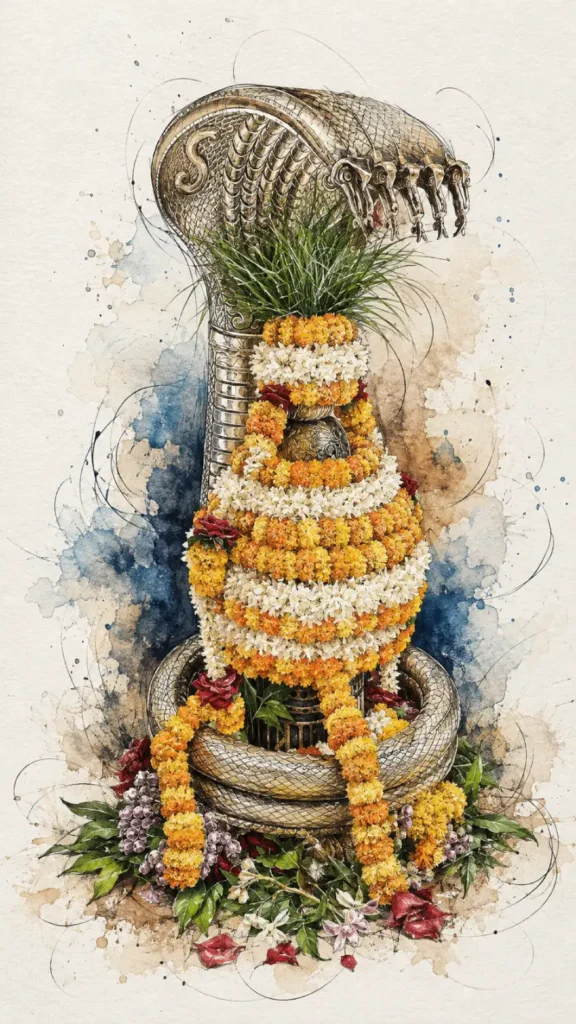
● Somnath ● Mallikarjuna ● Kashi Vishwanath ● Baidyanath ● Kedarnath ● Grishneshwar ●
● Rameshwaram ● Bhimashankar ● Mahakaleshwar ● Trimbakeshwar ● Nageshwar ● Omkareshwar ●
Shiva as the Lord of the Universe
There are sacred places that people visit, and then there are sacred places that seem to live within the memory of a civilisation. Kashi is one of them. On the banks of the Ganga, amidst ancient lanes, temple bells, lamps, prayers and the timeless rhythm of Varanasi, stands the shrine of Shiva as Kashi Vishwanath — Vishweshwara, the Lord of the Universe. Here, Shiva is worshipped as one of the traditional twelve Jyotirlingas. The very name Vishwanath expresses an immense idea: the Lord who belongs not merely to one place, one family, or one community, but to the entire universe.
For generations, devotees have travelled to Kashi seeking darshan, prayer, spiritual reflection and a deeper relationship with Shiva. The Kashi Vishwanath Jyotirlinga is therefore more than a temple image. It represents a sacred meeting point of Shiva, Ganga, pilgrimage, knowledge, devotion and the ancient spiritual imagination of India. That is also what makes Kashi Vishwanath such a compelling subject for sacred art. A beautifully created artwork can bring together the Shiva Linga, the golden temple, the atmosphere of Kashi and the eternal presence of the Ganga into one visual expression.
Who Is Kashi Vishwanath Jyotirlinga?
Kashi Vishwanath is the Jyotirlinga of Lord Shiva in Varanasi, Uttar Pradesh. The city of Varanasi is traditionally known as Kashi, while Vishwanath or Vishweshwara means “Lord of the Universe.” The temple is therefore popularly known as the Kashi Vishwanath Temple. It stands on the western bank of the Ganga and is regarded as one of the twelve Jyotirlinga shrines of Shiva. The presiding sacred form is the Shiva Linga worshipped as Vishvanatha or Vishveshvara. The Jyotirlinga tradition understands these sacred manifestations as especially significant expressions of Shiva’s radiant presence. In the traditional twelve-Jyotirlinga invocation, Kashi is associated with Vishweshvara. But Kashi Vishwanath has an importance that extends beyond the list of twelve.
Kashi itself is one of Hinduism’s great sacred cities. The Kashi Khanda of the Skanda Purana devotes extensive attention to the spiritual greatness of Kashi, its sacred geography, and its relationship with Shiva. The Shiva Purana also contains a section devoted specifically to the greatness of the Kashi-Vishveshvara Jyotirlinga.
The Meaning of the Name Kashi Vishwanath
The name carries several layers of meaning.
Kashi is traditionally connected with the idea of radiance or illumination. It is therefore often understood as a city associated with spiritual light.
Vishwanath comes from Vishwa, meaning the universe or all existence, and Nath, meaning lord or master.
Together, Kashi Vishwanath can be understood devotionally as “the Lord of the Universe in Kashi.”
The related name Vishweshwara carries the same expansive idea — Shiva as the Lord who encompasses the whole of existence.
This is important to the spiritual character of the shrine.
Kashi Vishwanath is not presented merely as Shiva belonging to a particular temple. He is experienced as Shiva who is intimately present within the sacred life of Kashi itself.
The Story of Kashi Vishwanath
Unlike some Jyotirlingas whose traditions centre around one dramatic battle or miracle story, the sacred identity of Kashi Vishwanath is deeply connected with the greatness of Kashi itself. The Puranic tradition repeatedly presents Kashi as a city especially beloved by Shiva. The Shiva Purana, Koti Rudra Samhita, includes a chapter on the greatness of the Kashi-Vishveshvara Jyotirlinga. There, Shiva himself speaks about the sacred significance of Kashi and Vishweshvara. The Skanda Purana’s Kashi Khanda goes much further, presenting Kashi as a sacred realm filled with Shiva’s presence. Its narratives describe numerous lingas, sacred wells, tirthas, and places associated with Shiva throughout the city.
This creates a different kind of sacred story. Kashi Vishwanath is not simply a deity who arrives after defeating an enemy. He is Shiva as the eternal spiritual centre of Kashi. The traditional imagination sees the city as a place where the boundaries between ordinary life and spiritual seeking become unusually close. The Ganga flows beside the city. Funeral fires burn at the ghats. Bells sound from temples. Pilgrims walk through narrow lanes. Scholars, ascetics, householders and travellers have all formed part of Kashi’s religious life.
At the heart of this sacred landscape stands Vishwanath. The message is profound: Shiva is not distant from life. The divine can be encountered within life itself — in prayer, impermanence, knowledge, surrender and remembrance.
The Divine Form of Kashi Vishwanath
Kashi Vishwanath is worshipped primarily in the form of a Shiva Linga, rather than as an anthropomorphic standing image of Shiva. This distinction matters when creating devotional artwork. The central visual focus should therefore remain the Linga and its sacred presence. Artists may surround it with elements traditionally associated with Shiva — such as Nandi, bilva leaves, lamps, flowers, temple architecture, or the atmosphere of Kashi — but these should be understood as artistic and devotional expressions rather than claiming that every visual detail is prescribed specifically for the Kashi Vishwanath Jyotirlinga.
The Linga itself is powerful precisely because it does not depend upon a detailed human portrait. Its simplicity creates space for contemplation. In sacred art, a softly illuminated Shiva Linga can therefore communicate stillness, eternity, and divine presence without excessive ornamentation.
The Symbols and Sacred Landscape of Kashi Vishwanath
Kashi Vishwanath becomes especially distinctive when its surrounding sacred geography is allowed to become part of the visual story.
The Shiva Linga
The Linga is the central object of worship and the visual heart of the shrine. It represents Shiva’s presence in a form that invites reverence and contemplation.
Nandi
Nandi, Shiva’s sacred bull and devoted attendant, is an important Shaiva symbol. In devotional compositions, Nandi can create a visual relationship between the devotee and the sanctum.
The Ganga
The Ganga gives Kashi its extraordinary geographical and spiritual character. For a Kashi Vishwanath artwork, the river can become more than background scenery. It can represent continuity, pilgrimage, and the flowing movement of life.
The Golden Temple
The present Kashi Vishwanath Temple is famous for its gold-covered upper elements, giving rise to its popular association with the “Golden Temple” of Varanasi. The current temple structure was built under the patronage of Maharani Ahilyabai Holkar in 1780, while gold was later added to parts of the temple by Maharaja Ranjit Singh. For an artist, this creates an extraordinary visual vocabulary: gold against the old city, Shiva against the Ganga, temple architecture against the immense spiritual atmosphere of Kashi.
The Spiritual Meaning of Kashi Vishwanath
The deepest message of Kashi Vishwanath is not simply power. It is presence. Shiva as Vishwanath represents a divine reality greater than individual identity, status, or circumstance. Kashi’s traditions also place enormous emphasis on knowledge, liberation, and spiritual awakening. The sacred city is traditionally regarded as a place where the search for ultimate truth becomes central to human life.
This gives Kashi Vishwanath several meaningful spiritual themes:
- surrender before the greater reality
- remembrance of the eternal
- inner freedom
- spiritual knowledge
- acceptance of life’s impermanence
- devotion beyond material identity
- courage to face change
- movement from worldly attachment toward deeper awareness
The idea of liberation is particularly important in Kashi’s traditional sacred imagination. It should be understood as a religious belief and devotional aspiration, rather than as a promise that a particular act or visit automatically produces a supernatural result.
Why Devotees Are Drawn to Kashi Vishwanath
For many devotees, Kashi Vishwanath represents the Shiva they turn toward when they want to remember what is larger than everyday concerns. People come to Kashi for many reasons.
Some seek darshan.
Some come during pilgrimage.
Some come to pray for their families.
Some come to experience the atmosphere of the ancient city.
Others simply want to sit quietly near the Ganga and remember Shiva.
The appeal of Vishwanath is therefore deeply personal.
The shrine can speak to someone facing uncertainty just as meaningfully as it speaks to someone celebrating a new chapter of life.
Its message is not that life will always become easy.
Its message is that life can be approached with greater awareness, devotion and inner steadiness.
Kashi Vishwanath in Everyday Life
Modern life can feel very far removed from an ancient pilgrimage city.
Yet the spiritual question remains surprisingly similar.
What remains when success, possessions, plans and identities change?
Where do we find stillness when the mind is crowded?
How do we remember what matters when daily responsibilities become overwhelming?
Kashi Vishwanath offers one traditional answer: remember Shiva.
That remembrance does not have to mean withdrawing from ordinary life.
A professional can carry the idea of Vishwanath into a demanding working day.
A parent can find a moment of stillness through prayer.
A young person making difficult decisions can use Shiva as a symbol of steadiness and deeper reflection.
A family creating a home temple can choose Kashi Vishwanath as a reminder that spirituality is not separate from everyday life.
In this sense, sacred art can become quietly meaningful.
It does not replace worship.
It creates a visual point of remembrance.
Famous Temple Associated With Kashi Vishwanath
Kashi Vishwanath Temple is the principal temple associated with the Kashi Vishwanath Jyotirlinga.
Temple: Shri Kashi Vishwanath Temple
City: Varanasi
State: Uttar Pradesh
Address: CK 37/40, 41, 42, Bansphatak, Varanasi – 221001, Uttar Pradesh, India
The official temple portal identifies the present temple as having been constructed in 1780 by Maharani Ahilyabai Holkar. The Varanasi district administration also identifies the temple as one of the twelve Jyotirlingas and describes Vishwanath as the presiding deity of the city.
The temple’s history is layered, reflecting centuries of rebuilding, patronage and continuing devotion. The present structure is especially associated with Ahilyabai Holkar, while the temple’s golden appearance became one of its most recognisable features through later patronage.
For verified temple information and pilgrimage details, readers can consult:
Shri Kashi Vishwanath Temple — Official Portal
District Varanasi — Shri Kashi Vishwanath Temple
For the traditional Puranic account of the Jyotirlinga:
Shiva Purana — Greatness of Kashi-Vishveshvara Jyotirlinga
Vastu and Home Placement for Kashi Vishwanath Art
Kashi Vishwanath artwork can naturally suit a home temple, prayer room, or meditation space. According to commonly followed Vastu traditions, devotional artwork is generally best placed in a clean and respectful area dedicated to prayer or contemplation. A carefully framed Kashi Vishwanath artwork can also work beautifully in a quiet living-room corner, reading space, or spiritual area. There is no need to claim that a particular direction guarantees prosperity, protection, or other results. The more meaningful approach is to choose a place where the artwork can be seen with respect and where its presence supports prayer, reflection and remembrance.
Why Kashi Vishwanath Makes Meaningful Sacred Art
Kashi Vishwanath offers something unusually rich to a sacred artist.
It is not only Shiva.
It is Shiva + Kashi + Ganga + temple architecture + pilgrimage + light + timelessness.
That combination gives the subject a distinctive visual identity. A premium Kashi Vishwanath canvas could place the luminous Shiva Linga at the centre while allowing the golden temple architecture and atmospheric Varanasi surroundings to emerge softly behind it. A detailed framed artwork could focus more intimately on Vishwanath, Nandi and the sanctum. Another composition could bring together the temple and Ganga, with warm lamps reflecting on the water.
For ShaktiShraddha, this is where Kashi Vishwanath becomes especially compelling.
The artwork does not need to be merely another Shiva picture.
It can tell the story of Shiva in Kashi.
A thoughtfully created piece can evoke the golden temple at dawn, the quiet glow of lamps, the sacred river, the ancient city, and the stillness of the Shiva Linga.
For an Indian home, it can become a connection to one of India’s most important pilgrimage traditions.
For an NRI home, it can carry an especially poignant cultural memory — a visual connection to Kashi even when thousands of kilometres away.
For a devotee, it can become a quiet reminder of Shiva.
For a collector, it can represent the meeting of Indian spirituality, history, and visual culture.
This is the real beauty of sacred art.
The artwork does not claim to possess supernatural power.
Instead, it gives spiritual meaning a visible place in everyday surroundings.
Kashi Vishwanath — The Light That Belongs to Everyone
Kashi Vishwanath carries an extraordinary idea: Shiva as Vishwanath, Lord of the Universe.
continues to draw people toward Shiva.
The Ganga flows.
The bells ring.
Pilgrims arrive.
Lamps are lit.
And at the heart of this living tradition remains Vishwanath.
Perhaps that is why Kashi Vishwanath feels so powerful as a subject for sacred art. It allows an artist to express not only the form of Shiva, but an entire spiritual atmosphere — the gold of the temple, the flowing Ganga, the ancient city and the stillness of the Linga.
A ShaktiShraddha artwork inspired by Kashi Vishwanath can therefore become more than decoration.
It can become a visual reminder of devotion, a focal point for prayer, a connection to India’s sacred heritage, and a quiet invitation to remember what is eternal amid the movement of everyday life.
Some sacred places are remembered for their architecture. Kashi is remembered for its presence. And at the heart of Kashi stands Vishwanath — Shiva, the Lord of the Universe.
FAQs
1. Who is Kashi Vishwanath Jyotirlinga?
Kashi Vishwanath is the Shiva Jyotirlinga worshipped at the Kashi Vishwanath Temple in Varanasi, Uttar Pradesh. Vishwanath means “Lord of the Universe.”
2. What does Kashi Vishwanath mean?
“Kashi” is the traditional name of Varanasi, while “Vishwanath” means Lord of the Universe. The name expresses Shiva’s universal presence in the sacred city of Kashi.
3. Which scripture is associated with Kashi Vishwanath?
The Shiva Purana contains a section on the greatness of the Kashi-Vishveshvara Jyotirlinga. The Skanda Purana’s Kashi Khanda also extensively describes the sacred importance of Kashi and its relationship with Shiva.
4. Where is Kashi Vishwanath Temple located?
The temple is located in Varanasi, Uttar Pradesh, on the western side of the Ganga. Its official address is CK 37/40, 41, 42, Bansphatak, Varanasi – 221001.
5. Why is Kashi Vishwanath considered a Jyotirlinga?
Kashi Vishwanath is traditionally recognised as one of Shiva’s twelve Jyotirlinga shrines, representing an especially sacred manifestation of Shiva’s radiant presence.
6. What does Kashi Vishwanath symbolize?
Kashi Vishwanath is especially associated with Shiva’s universal presence, spiritual knowledge, devotion, surrender, inner freedom and the traditional quest for liberation.
7. Is Kashi Vishwanath artwork suitable for a home temple?
Yes. A respectful Kashi Vishwanath painting or framed artwork can naturally suit a home temple, prayer room or meditation space. It can serve as a visual reminder of devotion and spiritual reflection.
8. What makes Kashi Vishwanath sacred art distinctive?
Its visual identity combines Shiva, the Jyotirlinga, the golden temple, Varanasi, the Ganga, and the atmosphere of an ancient pilgrimage city. This gives Kashi Vishwanath artwork a strong cultural and devotional character. The ancient city of Kashi has changed through centuries, yet its central spiritual identity.
9. How can I reach Kashi Vishwanath Temple from the airport?
The nearest airport is Lal Bahadur Shastri International Airport (VNS) in Varanasi, located approximately 25–30 km from Kashi Vishwanath Temple. From the airport, visitors can reach the temple area by taxi, cab, or other local transportation. Travel time can vary depending on traffic and the route taken. Because the temple is in the old city near the Ganga and Vishwanath Gali, vehicles may not be able to travel directly to the temple entrance. Visitors may need to continue the final part of the journey on foot from the designated vehicle-access area.
10. How can I reach Kashi Vishwanath Temple from the railway station?
Several railway stations serve Varanasi. Varanasi Junction (BSB) and Banaras Railway Station (BSBS) are among the principal stations used by visitors travelling to the city. From the railway station, devotees can continue toward the Kashi Vishwanath Temple area by taxi, auto-rickshaw, or other local transportation. Since the temple is located within the historic lanes of central Kashi, the final approach may involve walking through the surrounding streets and temple area.
Visitors should allow additional time for traffic, security checks, and walking when planning their temple visit.
11. What other important temples and sacred places can I visit in Varanasi?
Varanasi is home to many important temples and sacred places you can visit along with Kashi Vishwanath Jyotirlinga. Some notable places include:
- Kaal Bhairav Temple — Bhatt Ki Gali, Golghar, Ghasi Tola, Varanasi, Uttar Pradesh – 221001. Kaal Bhairav is traditionally revered as the guardian.
- Annapurna Devi Temple — D 9, Annapurna Math Mandir, 1 Vishwanath Gali, Godowlia, Varanasi, Uttar Pradesh – 221001. The temple is located very close to Kashi Vishwanath Temple.
- Sankat Mochan Hanuman Temple — B 2/15, Tulsi Ghat, Bhadaini, Varanasi, Uttar Pradesh – 221005. This famous Hanuman temple is traditionally associated with Goswami Tulsidas.
- Durga Kund Temple — C14/160-36-A, Durgakund, Varanasi, Uttar Pradesh – 221005. The temple is dedicated to Goddess Durga and is located beside the historic Durga Kund.
- Tulsi Manas Temple — Sankat Mochan Road, Durga Kund Road, Varanasi, Uttar Pradesh – 221005. The temple is dedicated to Lord Rama and is associated with the literary legacy of Goswami Tulsidas and the Ramcharitmanas.
The sacred Ganga ghats, particularly Dashashwamedh Ghat and Manikarnika Ghat, are also an important part of the spiritual landscape of Kashi. Exploring these temples and sacred places along with Kashi Vishwanath allows visitors to experience Varanasi not simply as the home of a Jyotirlinga, but as one of India’s most important living pilgrimage cities.