
Kedarnath Jyotirlinga
● Somnath ● Mallikarjuna ● Kashi Vishwanath ● Baidyanath ● Kedarnath ● Grishneshwar ●
● Rameshwaram ● Bhimashankar ● Mahakaleshwar ● Trimbakeshwar ● Nageshwar ● Omkareshwar ●
Where Shiva Stands Beyond the Reach of Fear
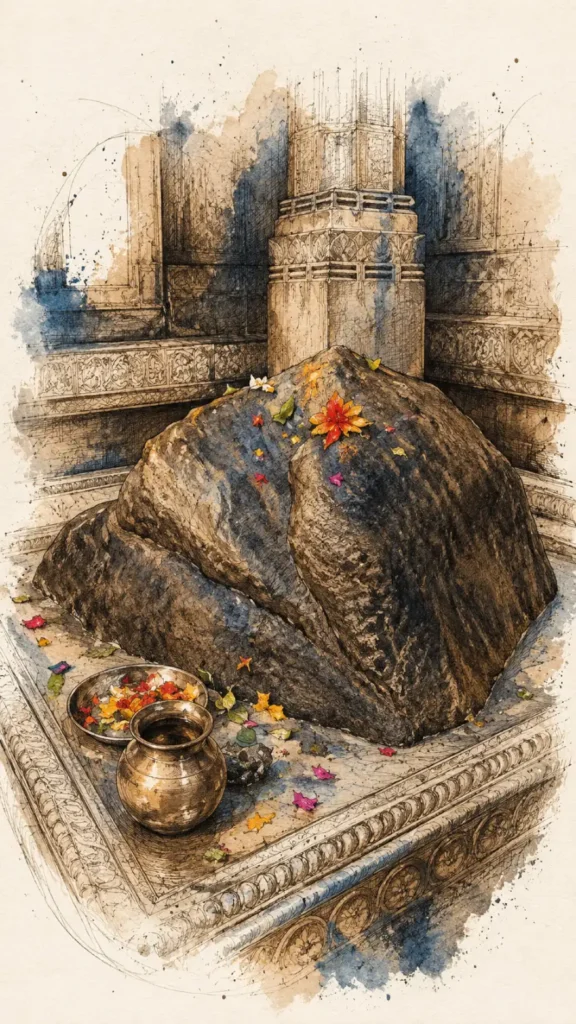
There are sacred places where the beauty of nature attracts the eye. And then there are places where the landscape itself seems to deepen one’s sense of the Divine. High in the Garhwal Himalayas, beside the Mandakini River and surrounded by immense mountain peaks, stands Kedarnath — one of the twelve revered Jyotirlingas of Lord Shiva. Here Shiva is worshipped in a form unlike the familiar smooth, rounded Shiva Lingas seen in many temples. The sacred manifestation at Kedarnath is a natural, irregular rock formation traditionally understood as the hump of Shiva in his divine bull form.
The journey to Kedarnath has therefore never been only about reaching a temple. It is also a journey inward — through effort, humility, endurance, and surrender. Kedarnath is the eleventh of the twelve Jyotirlingas and is also one of the five sacred shrines of the Panch Kedar tradition. It forms an important part of Uttarakhand’s Chota Char Dham pilgrimage. The official Shri Badrinath Kedarnath Temple Committee places the shrine at about 3,584 metres above sea level in Rudraprayag district.
Who Is Kedarnath Jyotirlinga?
Kedarnath is a sacred manifestation of Lord Shiva, worshipped as a Jyotirlinga in the high Himalayas of Uttarakhand. The word Jyotirlinga joins jyoti, meaning light or radiance, with linga, the sacred symbol or manifestation of Shiva. The tradition of the twelve Jyotirlingas represents Shiva’s limitless divine presence expressed through sacred places across India. Kedarnath holds a particularly distinctive place among them.
The temple stands in the historic region known as Kedar Khand, beside the Mandakini River, with the great Himalayan ranges rising around it. The official district administration describes Kedarnath as one of the twelve Jyotirlingas and places the temple at approximately 3,581 metres above sea level.
It is also associated with three major dimensions of Hindu pilgrimage:
- Jyotirlinga — a sacred manifestation of Shiva.
- Panch Kedar — the principal shrine among five Himalayan Shiva temples.
- Chota Char Dham — one of Uttarakhand’s four major pilgrimage destinations.
This combination gives Kedarnath an identity that is both intensely Shaiva and deeply connected with the sacred geography of the Himalayas.
The Meaning of Kedarnath
The name Kedarnath is traditionally understood through the Sanskrit words Kedara and Natha. Kedara can refer to a field or cultivated land, while Natha means lord or master. Thus, Kedarnath may be understood as “Lord of the Field.” But the spiritual meaning goes deeper than a literal translation. The Himalayan landscape around Kedarnath has long been regarded as sacred ground — a place of austerity, meditation, and divine presence. In devotional understanding, Shiva as Kedarnath is not simply a deity residing in a particular building. He is experienced as the Lord present within an extraordinary sacred landscape. The mountains, river, stone, sky, and silence all become part of the pilgrimage.
The Story of Kedarnath Jyotirlinga
Kedarnath carries more than one sacred narrative, and these traditions complement one another.
Nara and Narayana and the Manifestation of Kedareshvara
One important account is preserved in the Koti-Rudra Samhita of the Shiva Purana. According to this tradition, the divine sages Nara and Narayana performed intense austerities and worshipped Lord Shiva with a sacred earthen Shiva Linga. Their devotion continued for a long period. Pleased with their tapasya, Shiva appeared before them and offered them a boon. Rather than asking for worldly power or personal possessions, they wished for Shiva to remain permanently in the sacred Himalayan region so that devotees could continue to worship him there. Shiva accepted their devotion and manifested at Kedara as Kedareshvara Jyotirlinga.
The story carries a beautiful message. True devotion does not merely ask the Divine to change the world around us. It seeks a lasting relationship with the Divine itself. The Shiva Purana tradition associated with Kedareshvara therefore places tapasya, devotion, and divine presence at the heart of Kedarnath.
Shiva Purana tradition on Kedarnath Jyotirlinga
The Pandavas and the Divine Bull
A second extremely influential tradition connects Kedarnath with the Pandavas and the origin of the Panch Kedar pilgrimage. After the Kurukshetra war, the Pandavas were burdened by the consequences of the terrible destruction that had taken place. Although they had fought for their understanding of dharma, the war had also resulted in the deaths of relatives, teachers, and other members of their own wider family. Tradition says that they sought Lord Shiva’s blessings and wished to atone for the burden they carried. Shiva, however, did not immediately reveal himself.
He withdrew towards the Himalayas and took the form of a great bull. The Pandavas eventually recognised him. As the divine bull attempted to disappear into the earth, Bhima tried to hold him. The bull’s body disappeared beneath the ground, while its hump remained manifested at Kedarnath.
The other parts of the divine form are traditionally associated with four other Himalayan shrines:
- Tungnath — the arms
- Rudranath — the face
- Madhyamaheshwar — the navel or middle portion
- Kalpeshwar — the matted hair
Together, these five shrines are known as Panch Kedar. This Pandava narrative is best understood as a sacred pilgrimage tradition rather than as an independently verified historical event. The official Rudraprayag district account also preserves this story as the traditional explanation for Kedarnath and the Panch Kedar temples. The spiritual lesson is powerful: even victory cannot remove the need for humility. The Pandavas had achieved the greatest worldly triumph, yet they still had to seek Shiva with surrender.
The Divine Form of Kedarnath
Kedarnath is especially distinctive because the principal sacred form is not presented as a conventional anthropomorphic image of Shiva. Inside the sanctum, devotees worship a natural conical rock formation, traditionally understood as the hump of Shiva’s bull manifestation. This gives Kedarnath its remarkable visual identity. There is no need for an elaborate crown, multiple arms, or weapons to communicate Shiva’s presence here. The mountain itself seems to become part of the iconography.
The roughness of the sacred stone, the surrounding Himalayan peaks, and the ancient stone temple together create an image of Shiva as ancient, grounded, austere, and beyond ornament.
Devotional artwork may additionally portray Kedarnath with:
- the sacred Shiva form within the temple
- Nandi at the entrance
- snow-covered Himalayan peaks
- the Mandakini River
- the Kedarnath temple
- bells, lamps and flowers
- the sacred atmosphere of the Himalayan valley
These surrounding elements are artistic interpretations used to communicate the atmosphere of the pilgrimage. They should not be confused with a scriptural prescription for how the Jyotirlinga itself must be visually represented.
The Symbols and Attributes of Kedarnath
Kedarnath’s symbolism is unusually connected with landscape.
The Mountain
The Himalayas represent height, silence, endurance, and spiritual aspiration. In Kedarnath artwork, the mountains can visually express the movement from worldly noise toward inner stillness.
The Sacred Rock
The natural form worshipped at Kedarnath reminds devotees that Shiva does not depend upon human craftsmanship to be present. Nature itself can become a sacred medium.
Nandi
Nandi, the divine bull and vehicle of Shiva, stands outside the temple. His presence symbolises devotion, steadiness, and attentive surrender.
The Mandakini
The river flowing through the valley adds another layer of sacred symbolism. Water suggests movement and purification, while the immovable mountain suggests stillness.
Together they create a powerful visual balance:
river and mountain, movement and stillness, effort and surrender.
The Spiritual Meaning of Kedarnath
The deepest message of Kedarnath is perhaps surrender after struggle.
The Pandavas’ story reminds us that achievement alone does not bring peace. The Nara-Narayana tradition reminds us that sincere tapasya can be an offering of the whole self.
Kedarnath therefore speaks to people who are carrying something within them.
It may be responsibility.
It may be uncertainty.
It may be regret.
It may be the pressure of achievement.
Or simply the feeling that life has become too noisy.
Shiva at Kedarnath represents a presence that does not need to shout.
He stands in the mountains.
Still.
Ancient.
Unmoved.
For many devotees, this becomes a spiritual reminder to pause, accept one’s limitations, surrender unnecessary pride, and continue one’s path with greater clarity.
Why Devotees Are Drawn to Kedarnath
Devotees traditionally visit Kedarnath to seek darshan of Shiva, offer worship, and experience the sacred Himalayan pilgrimage. Many are drawn by the Jyotirlinga tradition. Others feel a deep connection with the Pandava story and Panch Kedar. Still others are moved by the extraordinary landscape surrounding the temple. The pilgrimage itself has become part of the spiritual experience.
The effort required to reach Kedarnath can encourage patience and humility. The destination then becomes more than a geographical point. It becomes a reminder that some meaningful experiences require effort before they reveal their depth.
Kedarnath in Everyday Life
Modern life often rewards speed.
Messages arrive instantly. Decisions are expected quickly. Work follows us home. Families carry multiple responsibilities. Personal ambitions compete with the need for peace.
Kedarnath offers a very different rhythm.
Its symbolism asks us to slow down.
The mountain teaches endurance.
The river teaches movement.
The stone teaches stability.
The Pandavas’ story teaches humility, and Shiva teaches the possibility of remaining inwardly still even when the world around us is changing. For someone beginning a new chapter in life, facing uncertainty or simply seeking a more grounded spiritual routine, the image of Kedarnath can become a quiet reminder:
Do not confuse movement with progress. Do not confuse achievement with peace.
Famous Temple Associated With Kedarnath Jyotirlinga
Shri Kedarnath Temple, Kedarnath, Rudraprayag, Uttarakhand
Temple: Shri Kedarnath Temple
Deity: Lord Shiva as Kedarnath Jyotirlinga
Town: Kedarnath
District: Rudraprayag
State: Uttarakhand, India
Altitude: Approximately 3,581–3,584 metres
River: Mandakini
Complete public address:
Shri Kedarnath Temple, Kedarnath, District Rudraprayag, Uttarakhand – 246445, India.
Kedarnath Temple is one of the most revered Shiva temples in India and is officially recognised as one of the twelve Jyotirlingas. It is also part of the Chota Char Dham and Panch Kedar traditions. The temple is built from massive stone slabs and contains a garbha-griha and mandap. A large Nandi stands outside the entrance. The shrine is also strongly associated with the spiritual legacy of Adi Shankaracharya.
Temple tradition connects the revival of the shrine with him, although the precise history of the temple’s earliest construction should be distinguished from later traditional accounts. Because of the extreme Himalayan winter, worship follows a seasonal cycle. During the winter period, the temple at Kedarnath is closed, and the sacred worship tradition continues at the winter seat in Ukhimath. For official pilgrimage information, temple services, and current yatra guidance, devotees should refer to the Shri Badrinath Kedarnath Temple Committee.
Shri Badrinath Kedarnath Temple Committee — Official Kedarnath information
District Rudraprayag — Official Kedarnath Temple information
Why Kedarnath Makes Meaningful Sacred Art
Some sacred places are naturally suited to visual storytelling. Kedarnath is one of them. Imagine a composition where the ancient stone temple stands beneath immense Himalayan peaks, the Mandakini moves quietly through the valley, Nandi faces the sanctum, and the sacred Kedarnath form remains at the centre. Such an artwork can communicate an entire pilgrimage without requiring a single word.
For ShaktiShraddha, Kedarnath sacred art has a particularly strong visual and emotional appeal because it brings together Shiva, the Himalayas, pilgrimage, nature, and devotion in one image. A carefully composed Kedarnath canvas can become a powerful focal point in a home temple or meditation space. A refined framed Kedarnath artwork can suit an elegant spiritual interior while preserving the devotional character of the subject.
For families living outside India, a thoughtfully created Kedarnath image can also carry a different kind of meaning. It can become a visual connection to Indian pilgrimage traditions, Himalayan sacred geography, and the spiritual heritage of Lord Shiva.
The purpose of such art is not to promise supernatural results.
Its value lies in what it reminds us of.
Faith.
Endurance.
Humility.
Stillness.
And the courage to continue a difficult journey with devotion.
Kedarnath Artwork for the Home
According to commonly followed Vastu traditions, devotional images of Shiva are naturally suited to a puja room, prayer area, or meditation space where the artwork can be viewed respectfully.
A Kedarnath painting can also work beautifully in a quiet living-room corner, spiritual reading space, or personal meditation area.
The most important consideration is not a promise of guaranteed Vastu benefit, but cleanliness, respect, and the intention behind the placement.
A sacred image becomes most meaningful when it is allowed to remain a visible part of one’s spiritual life rather than being treated simply as decorative imagery.
The ShaktiShraddha Vision of Kedarnath
Kedarnath is not merely an image of a temple in the mountains.
It is a story of seeking Shiva after victory.
It is the humility of the Pandavas.
It is the tapasya of Nara and Narayana.
It is the strength of stone beneath snow.
It is the movement of the Mandakini.
And above all, it is the quiet presence of Shiva in a landscape where human beings naturally feel small.
That makes Kedarnath especially meaningful for sacred art.
A ShaktiShraddha interpretation can bring together the sacred rock, ancient temple, Nandi, Himalayan peaks, and river in a composition that feels devotional without becoming overly crowded.
Whether presented as premium wall art, framed artwork, or a high-resolution devotional image, the goal is to preserve the feeling of Kedarnath — that extraordinary meeting of mountain silence and Shiva bhakti.
In a world filled with constant movement, Kedarnath reminds us that some truths are found by becoming still.
And when that meaning enters a home through sacred art, the artwork can serve as a daily visual reminder of the qualities the devotee wishes to cultivate: humility, steadiness, courage, devotion, and surrender.
Kedarnath does not ask us to escape life’s mountains.
It reminds us to climb them with faith.
FAQs
1. Who is Kedarnath Jyotirlinga?
Kedarnath Jyotirlinga is one of the twelve sacred Jyotirlingas of Lord Shiva. It is located in Kedarnath, Rudraprayag district, Uttarakhand, high in the Garhwal Himalayas.
2. What does the name Kedarnath mean?
Kedarnath is traditionally understood from Kedara, meaning field or cultivated land, and Natha, meaning lord or master. It can therefore be understood as “Lord of the Field.”
3. What is the story of Kedarnath Jyotirlinga?
The Shiva Purana tradition connects Kedareshvara with the tapasya of Nara and Narayana. Another major Himalayan tradition tells how Shiva appeared as a bull while avoiding the Pandavas, leaving his hump at Kedarnath when he disappeared into the earth.
4. Why is Kedarnath associated with Panch Kedar?
Tradition says that different parts of Shiva’s bull manifestation appeared at five Himalayan locations. Kedarnath represents the hump, while Tungnath, Rudranath, Madhyamaheshwar and Kalpeshwar represent other parts.
5. What is special about the form of Shiva at Kedarnath?
The principal sacred manifestation is a natural rock formation traditionally understood as Shiva’s hump in his bull form. This gives Kedarnath a distinctive visual identity among the Jyotirlingas.
6. Which river flows near Kedarnath Temple?
The Mandakini River flows beside the Kedarnath pilgrimage area and forms an important part of its sacred Himalayan landscape.
7. Is Kedarnath artwork suitable for a home temple?
Yes. A respectful Kedarnath devotional artwork can naturally be placed in a home temple, prayer room, or meditation space. According to commonly followed Vastu traditions, such spaces are appropriate for devotional imagery.
8. What does Kedarnath represent in devotional art?
Kedarnath represents Shiva’s stillness, endurance, humility, surrender, and the spiritual strength required to undertake a difficult journey.
9. How can I reach Kedarnath Temple from the airport?
The nearest major airport to Kedarnath is Jolly Grant Airport in Dehradun. From the airport, pilgrims can travel by road towards Gaurikund, the base point for the Kedarnath pilgrimage. From Gaurikund, Kedarnath Temple is reached by the designated mountain trekking route. Uttarakhand Tourism identifies Jolly Grant as the nearest airport for the Kedarnath pilgrimage region.
Pilgrims may also use the helicopter services available during the pilgrimage season, subject to weather conditions, government regulations, and availability.
10. How can I reach Kedarnath Temple from the railway station?
The nearest major railway stations for the Kedarnath pilgrimage are Rishikesh and Haridwar. From either railway station, pilgrims need to continue by road towards Gaurikund, the traditional base for the Kedarnath trek. From Gaurikund, the journey to Kedarnath continues on foot or through permitted pilgrimage transport options such as ponies, palkis and other authorised services. Uttarakhand Tourism’s Char Dham itinerary describes the road journey to Gaurikund followed by the approximately 17-kilometre trek to Kedarnath.
11. What other important temples and sacred places can I visit near Kedarnath?
Several important temples and sacred places in the Kedarnath region can be visited along with Kedarnath Temple:
- Gaurikund Temple — Gaurikund, Rudraprayag District, Uttarakhand – 246471. Dedicated to Goddess Gauri, this temple is located at the traditional starting point of the Kedarnath pilgrimage trek.
- Triyuginarayan Temple — Triyuginarayan, Rudraprayag District, Uttarakhand – 246471. This ancient temple is traditionally associated with the divine wedding of Lord Shiva and Goddess Parvati. Triyuginarayan Temple
- Vishwanath Temple, Guptkashi — Guptkashi, Dewar, Rudraprayag District, Uttarakhand – 246439. This revered Shiva temple is an important pilgrimage stop on the route to Kedarnath. Vishwanath Temple
- Omkareshwar Temple, Ukhimath — Ukhimath, Rudraprayag District, Uttarakhand – 246469. The temple is closely associated with the winter worship of Kedarnath and other Himalayan deities. Uttarakhand Tourism identifies Ukhimath as an important node of the Panch Kedar pilgrimage circuit.
- Tungnath Temple — Tungnath, Rudraprayag District, Uttarakhand – 246419. One of the five Panch Kedar temples dedicated to Lord Shiva. Shri Tungnath Temple, Panch Kedar
These sacred places form part of the wider spiritual landscape of the Kedarnath and Panch Kedar region.